

Training Needs Analysis (TNA)   72-slide PPT PowerPoint presentation slide deck (PPTX)
$69.00

Training Needs Analysis (TNA) (72-slide PPT PowerPoint presentation slide deck (PPTX)) Preview Image
Log in to unlock full preview.
Training Needs Analysis (TNA) (72-slide PPT PowerPoint presentation slide deck (PPTX)) Preview Image
Arrow   Click main image to view in full screen.

Training Needs Analysis (TNA) (PowerPoint PPTX Slide Deck)

PowerPoint (PPTX) + Word (DOCX) 72 Slides

#1 in Employee Training $69.00
Developed by a Learning Experience Designer with global experience at industry leaders like Microsoft and IBM, this presentation is your indispensable resource for conducting Training Needs Analysis and enhancing workforce development.
Add to Cart


Immediate download
Fully editable PowerPoint
Free lifetime updates

BENEFITS OF THIS POWERPOINT DOCUMENT

  1. Provides knowledge on the nature and importance of conducting a Training Needs Analysis.
  2. Provides a systematic approach for conducting an effective Training Needs Analysis.
  3. Provides a TNA template to document training and development needs during performance appraisal.

EMPLOYEE TRAINING PPT DESCRIPTION

Training Needs Analysis (TNA) PPT by Allan Ung: Learn how to assess training gaps, set objectives, and create effective TNA reports and presentations. Download the ready-to-use template now. Training Needs Analysis (TNA) is a 72-slide PPT PowerPoint presentation slide deck (PPTX) with a supplemental Word document available for immediate download upon purchase.

Training Needs Analysis (TNA) goes beyond mere employee preferences or superficial surveys. It's a strategic process focused on aligning training with business objectives and bridging performance gaps.

This training PowerPoint will provide you with a comprehensive understanding of TNA, emphasizing its significance and guiding you through the key components and a nine-step process for effective implementation.

Note: This presentation comes with a complimentary TNA template (supplemental document) for the documentation of training and development needs during performance appraisal.

LEARNING OBJECTIVES

1. Understand the meaning and importance of conducting a Training Needs Analysis.
2. Gain knowledge on the components of a Training Needs Analysis.
3. Understand the common training and evaluation models.
4. Acquire detailed knowledge on the nine-step process for conducting a Training Needs Analysis.

CONTENTS

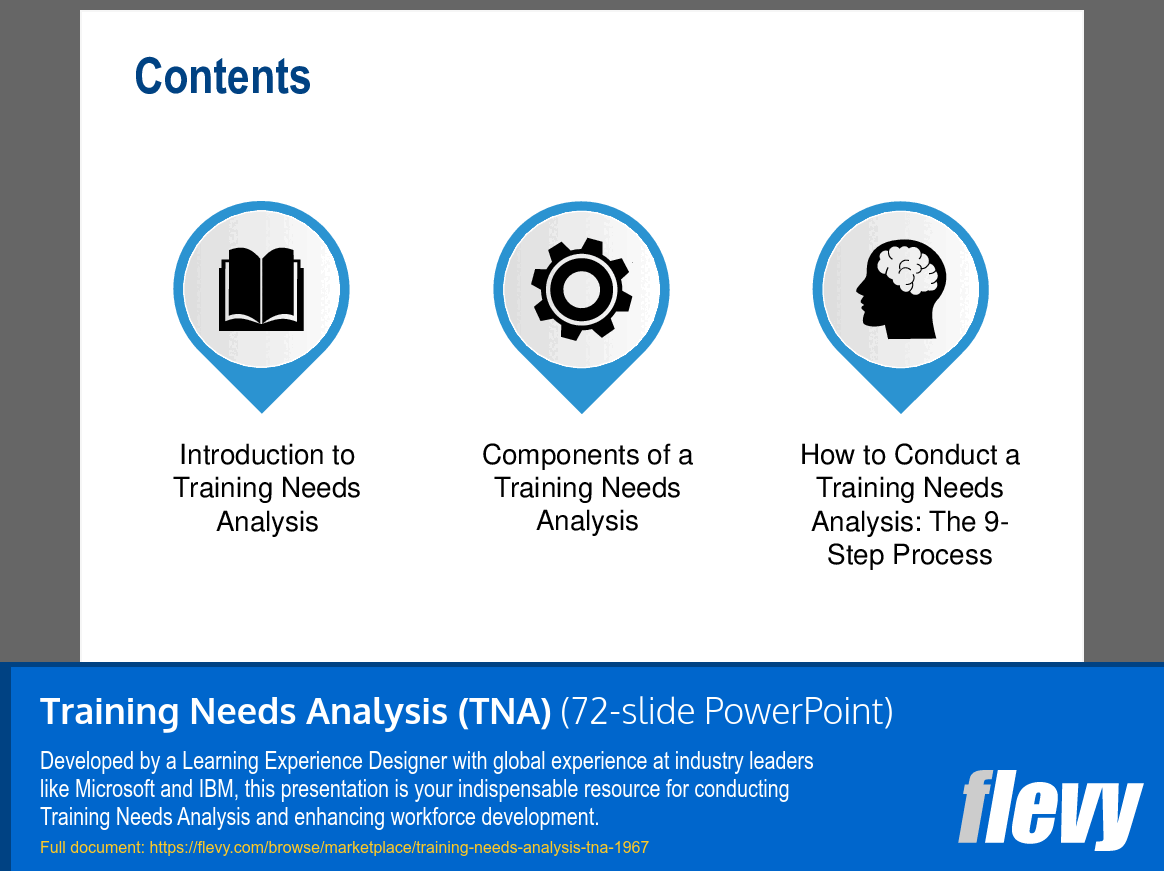
1. What Is Training Needs Analysis
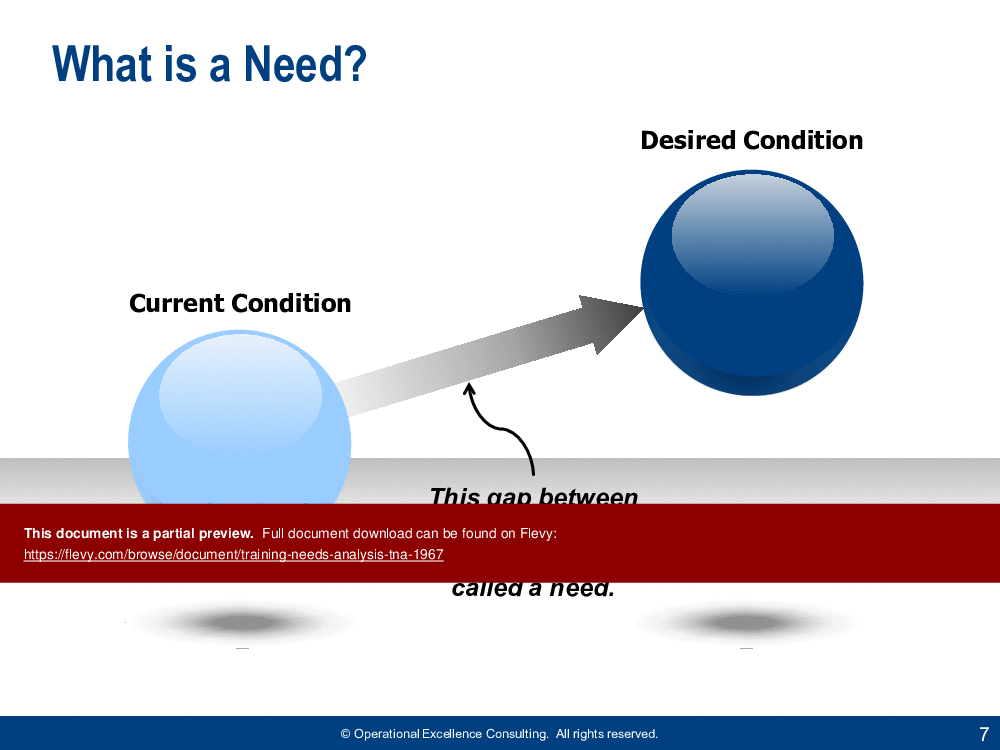
•  What is a Need?
•  What is Training Needs Analysis?
•  What Training Needs Analysis Is Not
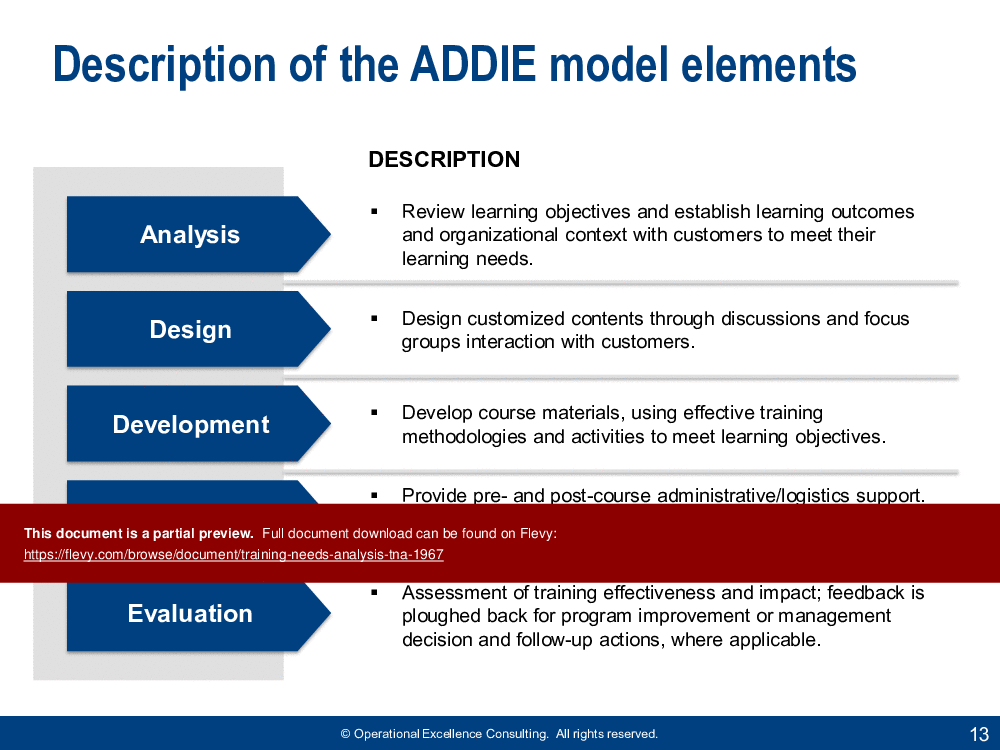
•  The ADDIE Model
•  What is the Impact of a Poorly Designed Training Needs Analysis?
•  Scope of Training Needs Analysis
•  Classification of Training Needs

2. Components of a Training Needs Analysis
•  Components of a Training Needs Analysis
•  Organizational Needs Analysis
•  Task/Job Analysis
•  Person Analysis
•  The Causes & Outcomes of a Training Needs Analysis
•  Key Concerns of Management and Trainers in Needs Analysis
•  The Kirkpatrick Training Evaluation Model

3. How to Conduct a Training Needs Analysis?
•  Nine Steps of Training Needs Analysis
•  Step 1 – Determine Desired Outcomes
•  Step 2 – Link Desired Outcomes with Employee Behavior
•  Step 3 – Identify Trainable Competencies
•  Step 4 – Evaluate Competencies & Determine Gaps
•  Step 5 – Prioritize Training Needs
•  Step 6 – Determine Training Method
•  Step 7 – Conduct Cost-Benefit Analysis
•  Step 8 – Report Analysis & Findings
•  Step 9 – Plan for Training Evaluation
•  Summary

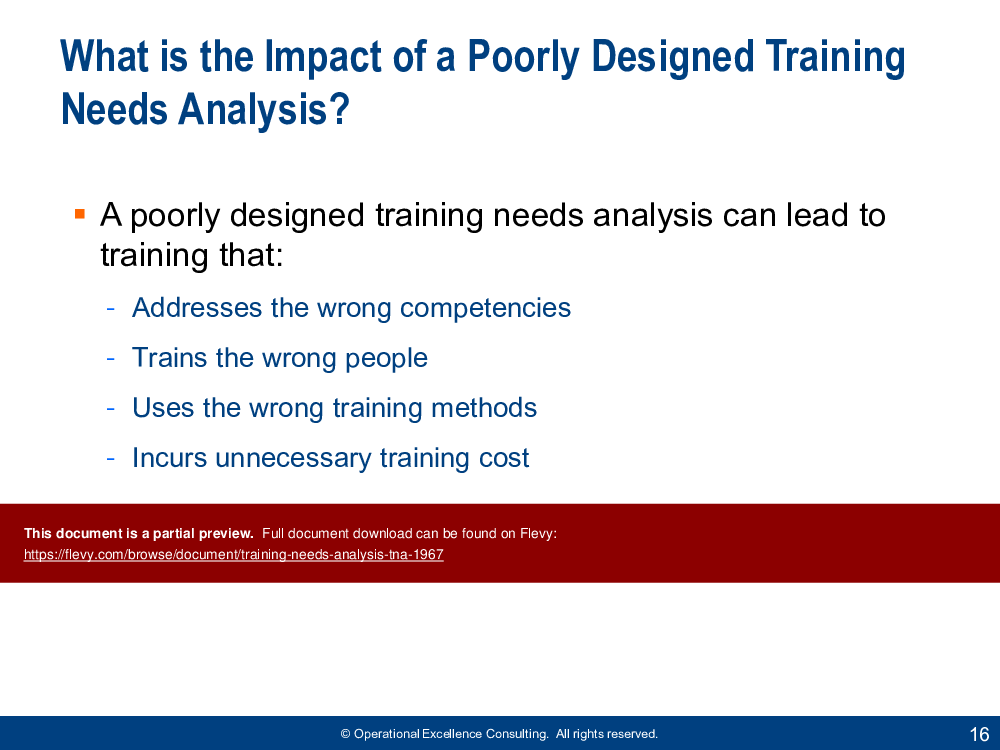
This presentation offers a detailed breakdown of the ADDIE model, essential for designing effective training programs. It also highlights the critical impact of a poorly designed TNA, emphasizing the importance of accuracy in the analysis process.

Got a question about the product? Email us at support@flevy.com or ask the author directly by using the "Ask the Author a Question" form. If you cannot view the preview above this document description, go here to view the large preview instead.

MARCUS OVERVIEW

This synopsis was written by Marcus [?] based on the analysis of the full 72-slide presentation.


Executive Summary
The Training Needs Analysis (TNA) presentation is a vital resource for organizations aiming to identify and address gaps in employee performance and learning. Developed by Operational Excellence Consulting, this presentation outlines a systematic approach to conducting a TNA, ensuring that training efforts are aligned with business objectives. The TNA process is essential for clarifying training needs, evaluating competencies, and implementing effective training solutions. By utilizing this presentation, corporate executives and training leaders can enhance workforce capabilities and drive organizational success.

Who This Is For and When to Use
•  HR Managers responsible for workforce development and training initiatives
•  Training and Development Specialists designing training programs
•  Organizational Leaders seeking to improve employee performance
•  Project Managers overseeing training implementation and evaluation

Best-fit moments to use this deck:
•  During the planning phase of a new training initiative
•  When assessing current training programs for effectiveness
•  In strategy meetings to align training with business objectives

Learning Objectives
•  Understand the meaning and importance of conducting a Training Needs Analysis
•  Gain knowledge on the components of a Training Needs Analysis
•  Understand common training and evaluation models
•  Acquire detailed knowledge of the nine-step process for conducting a Training Needs Analysis

Table of Contents
•  Introduction to Training Needs Analysis (page 1)
•  Components of a Training Needs Analysis (page 24)
•  How to Conduct a Training Needs Analysis: The 9-Step Process (page 36)

Primary Topics Covered
•  Training Needs Analysis Definition - A diagnostic process to identify gaps in learning and performance, determining future actions to enhance employee capabilities.
•  Importance of Training Needs Analysis - Ensures that training targets the right competencies and addresses specific business needs, avoiding unnecessary costs and misaligned efforts.
•  ADDIE Model - A systematic instructional design model comprising 5 phases: Analysis, Design, Development, Implementation, and Evaluation, with TNA conducted in the Analysis phase.
•  Components of TNA - Includes organizational analysis, task analysis, and person analysis to identify training needs effectively.
•  Kirkpatrick Training Evaluation Model - A framework for evaluating training effectiveness across 4 levels: Reaction, Learning, Behavior, and Results.
•  Nine-Step TNA Process - A structured approach to conducting a TNA, including determining desired outcomes, linking outcomes with employee behavior, and planning for training evaluation.

Deliverables, Templates, and Tools
•  TNA report template for documenting findings and recommendations
•  Checklist for evaluating current competencies and identifying gaps
•  Training evaluation plan template based on the Kirkpatrick model
•  Cost-benefit analysis framework for assessing training methods
•  Training needs prioritization matrix to identify high-impact areas

Slide Highlights
•  Overview of the ADDIE model and its relevance to TNA
•  Visual representation of the nine-step TNA process
•  Key questions to address in organizational needs analysis
•  Examples of training goals aligned with business objectives
•  Summary of the Kirkpatrick model for training evaluation

Potential Workshop Agenda
Introduction to Training Needs Analysis (30 minutes)
•  Discuss the importance of TNA in workforce development
•  Explore the components of a successful TNA

Conducting a TNA: The Nine-Step Process (60 minutes)
•  Walk through each step of the TNA process
•  Engage participants in identifying training needs within their teams

Evaluating Training Effectiveness (30 minutes)
•  Introduce the Kirkpatrick model and its application
•  Discuss methods for gathering feedback and measuring outcomes

Customization Guidance
•  Tailor the TNA report template to reflect organizational branding and specific training goals
•  Adjust the nine-step process to align with unique business contexts and challenges
•  Incorporate specific metrics and KPIs relevant to the organization’s objectives

Secondary Topics Covered
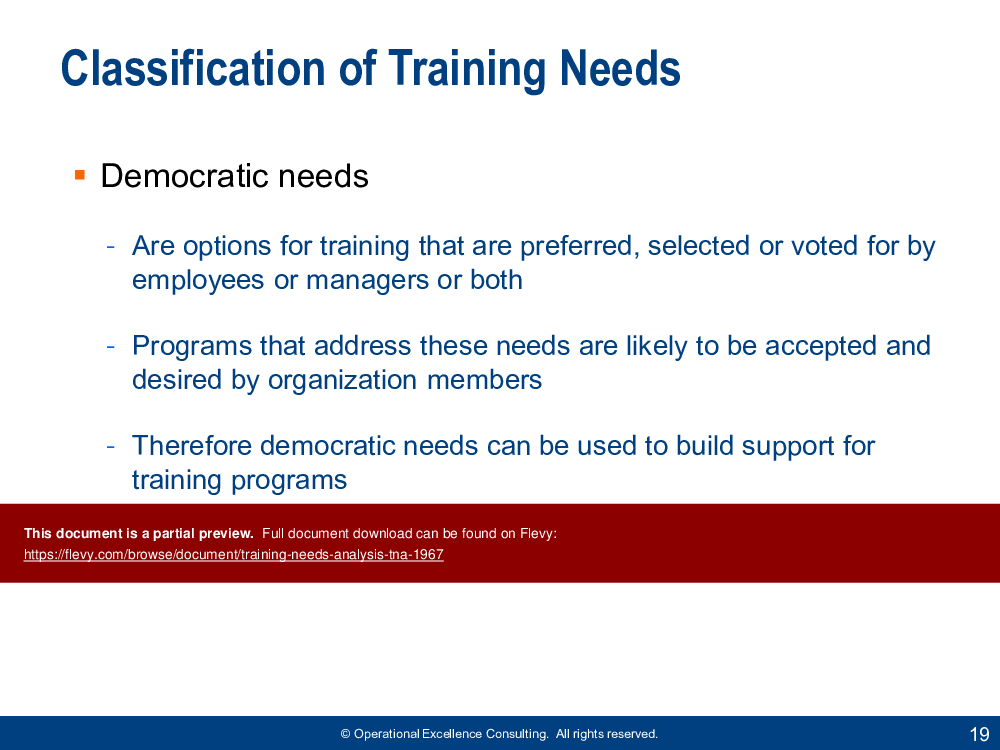
•  Classification of training needs: Democratic, Diagnostic, Analytical, and Compliance
•  Common training and evaluation models beyond ADDIE
•  Strategies for engaging stakeholders in the TNA process
•  Importance of aligning training with organizational culture and valuesDocument FAQ
What is Training Needs Analysis?
A Training Needs Analysis is a diagnostic process that identifies gaps in learning and performance, determining necessary actions to enhance employee skills and competencies.

Why is TNA important for organizations?
Conducting a TNA ensures that training efforts are targeted, effective, and aligned with business objectives, ultimately leading to improved performance and reduced costs.

What are the key components of a TNA?
The key components include organizational analysis, task analysis, and person analysis, which together provide a comprehensive view of training needs.

How does the ADDIE model relate to TNA?
The ADDIE model provides a structured framework for instructional design, with the TNA process occurring during the Analysis phase to inform subsequent design and development efforts.

What is the Kirkpatrick model?
The Kirkpatrick model is a widely used framework for evaluating training effectiveness across 4 levels: Reaction, Learning, Behavior, and Results.

How can I prioritize training needs?
Training needs can be prioritized by assessing the number of employees requiring training and the importance of each competency to business objectives.

What methods can be used for training evaluation?
Training evaluation can utilize surveys, performance assessments, and feedback from participants to measure the effectiveness of training programs.

How can I customize the TNA presentation for my organization?
The TNA presentation can be customized by incorporating specific organizational branding, metrics, and training goals relevant to your business context.

Glossary
•  Training Needs Analysis - A process to identify gaps in employee skills and performance.
•  ADDIE Model - A framework for instructional design comprising Analysis, Design, Development, Implementation, and Evaluation.
•  Kirkpatrick Model - A four-level evaluation model for assessing training effectiveness.
•  Organizational Analysis - An assessment of business needs and context to inform training requirements.
•  Task Analysis - A detailed examination of job roles to identify necessary competencies.
•  Person Analysis - An evaluation of individual employee capabilities against required competencies.
•  Democratic Needs - Training options preferred or selected by employees.
•  Diagnostic Needs - Focus on factors that lead to effective performance rather than existing problems.
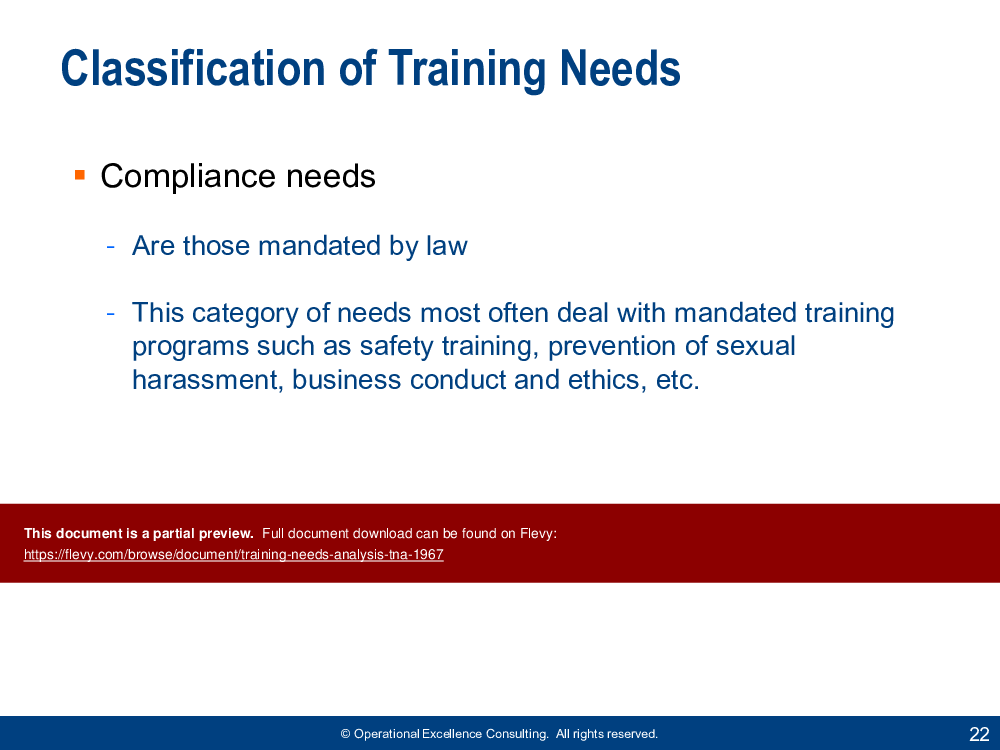
•  Compliance Needs - Training mandated by law or regulations.
•  Cost-Benefit Analysis - A method for evaluating the financial implications of training initiatives.
•  Training Evaluation - The process of assessing the effectiveness and impact of training programs.
•  Competencies - The knowledge, skills, and abilities required for effective performance.
•  Performance Gap - The difference between current and desired performance levels.
•  Training Methods - Various approaches to delivering training, including on-the-job training, mentoring, and e-learning.
•  Stakeholders - Individuals or groups with an interest in the training outcomes, including management and employees.
•  Feedback Mechanisms - Tools and methods for gathering input from training participants to improve future programs.
•  Learning Outcomes - The specific skills and knowledge that participants are expected to acquire through training.
•  Business Objectives - The goals and targets that the organization aims to achieve through its operations.
•  Training Plan - A detailed outline of the training program, including objectives, methods, and evaluation strategies.

Source: Best Practices in Employee Training, TNA PowerPoint Slides: Training Needs Analysis (TNA) PowerPoint (PPTX) Presentation Slide Deck, Operational Excellence Consulting


$69.00
Developed by a Learning Experience Designer with global experience at industry leaders like Microsoft and IBM, this presentation is your indispensable resource for conducting Training Needs Analysis and enhancing workforce development.
Add to Cart
  

ABOUT THE AUTHOR

Author image
Additional documents from author: 257
Terms of usage (for all documents from this author)

Operational Excellence Consulting, founded in 2009 by Allan Ung, draws from extensive experience at Microsoft, IBM, and Underwriters Laboratories (UL). We specialize in strategy deployment, customer experience design, and operational excellence, applying Design Thinking, Lean, and Systems Thinking to maximize customer value and minimize waste.

Our ... [read more]

Ask the Author a Question

You must be logged in to contact the author.

Click here to log in Click here register

Did you know?
The average daily rate of a McKinsey consultant is $6,625 (not including expenses). The average price of a Flevy document is $65.
Bundle and save! You can save up to % with bundles!

View bundle(s)


Trusted by over 10,000+ Client Organizations
Since 2012, we have provided business templates to over 10,000 businesses and organizations of all sizes, from startups and small businesses to the Fortune 100, in over 130 countries.
AT&T GE Cisco Intel IBM Coke Dell Toyota HP Nike Samsung Microsoft Astrazeneca JP Morgan KPMG Walgreens Walmart 3M Kaiser Oracle SAP Google E&Y Volvo Bosch Merck Fedex Shell Amgen Eli Lilly Roche AIG Abbott Amazon PwC T-Mobile Broadcom Bayer Pearson Titleist ConEd Pfizer NTT Data Schwab


Read Customer Testimonials

 
"As a consulting firm, we had been creating subject matter training materials for our people and found the excellent materials on Flevy, which saved us 100's of hours of re-creating what already exists on the Flevy materials we purchased."

– Michael Evans, Managing Director at Newport LLC
 
"One of the great discoveries that I have made for my business is the Flevy library of training materials.

As a Lean Transformation Expert, I am always making presentations to clients on a variety of topics: Training, Transformation, Total Productive Maintenance, Culture, Coaching, Tools, Leadership Behavior, etc. Flevy "

– Ed Kemmerling, Senior Lean Transformation Expert at PMG
 
"The wide selection of frameworks is very useful to me as an independent consultant. In fact, it rivals what I had at my disposal at Big 4 Consulting firms in terms of efficacy and organization."

– Julia T., Consulting Firm Owner (Former Manager at Deloitte and Capgemini)
 
"Flevy.com has proven to be an invaluable resource library to our Independent Management Consultancy, supporting and enabling us to better serve our enterprise clients.

The value derived from our [FlevyPro] subscription in terms of the business it has helped to gain far exceeds the investment made, making a subscription a no-brainer for any growing consultancy – or in-house strategy team."

– Dean Carlton, Chief Transformation Officer, Global Village Transformations Pty Ltd.
 
"Last Sunday morning, I was diligently working on an important presentation for a client and found myself in need of additional content and suitable templates for various types of graphics. Flevy.com proved to be a treasure trove for both content and design at a reasonable price, considering the time I "

– M. E., Chief Commercial Officer, International Logistics Service Provider
 
"FlevyPro provides business frameworks from many of the global giants in management consulting that allow you to provide best in class solutions for your clients."

– David Harris, Managing Director at Futures Strategy
 
"[Flevy] produces some great work that has been/continues to be of immense help not only to myself, but as I seek to provide professional services to my clients, it gives me a large "tool box" of resources that are critical to provide them with the quality of service and outcomes they are expecting."

– Royston Knowles, Executive with 50+ Years of Board Level Experience
 
"As a niche strategic consulting firm, Flevy and FlevyPro frameworks and documents are an on-going reference to help us structure our findings and recommendations to our clients as well as improve their clarity, strength, and visual power. For us, it is an invaluable resource to increase our impact and value."

– David Coloma, Consulting Area Manager at Cynertia Consulting


Save with Bundles

This document is available as part of the following discounted bundle(s):

Save %!
Complete Instructional Design Toolkit

This bundle contains 3 total documents. See all the documents to the right.

$139.00


Add Bundle & Save


Customers Also Bought These Documents


Customers Also Like These Documents

Explore Related Management Topics


Your Recently Viewed Documents
Download our FREE Organization, Change, & Culture, Templates

Download our free compilation of 50+ slides and templates on Organizational Design, Change Management, and Corporate Culture. Methodologies include ADKAR, Burke-Litwin Change Model, McKinsey 7-S, Competing Values Framework, etc.